
Introduction
Location Map
GIS Concepts
Conventions
Database Schema
GIS Analysis Flowchart
Custom GIS Analyses
PHP Code
Base Map
Results: John Martin SWA
Results: Lower Gunnison
Conclusion
References
Calculating Suggested Tamarisk Treatment Prescriptions
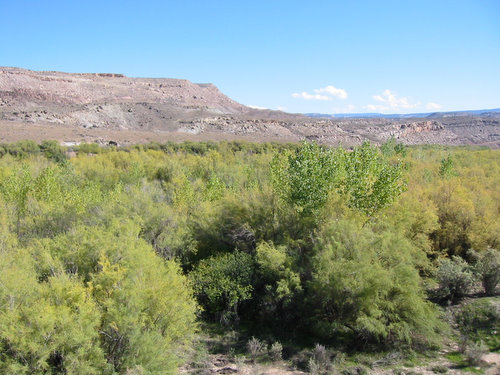
Image of Tamarisk from the 10 –Year Strategic Plan on the Comprehensive Removal of Tamarisk and the Coordinated Restoration of Colorado’s Native Riparian Ecosystems by the Colorado Department of Natural Resources, January 8 2004
Background Information
Tamarisk or saltcedar (Tamarix
spp.) is an invasive shrub or small tree introduced to the United
States for
erosion control and landscaping
Tamarisk is an opportunistic invader, and is able
to take
advantage of the extensive hydrological changes introduced by dams and
irrigation projects
Tamarisk infestations reduce habitat for most
species, lower
the water table, and increase flooding risk
Removing
tamarisk is
expensive and time consuming
Problem Statement: A Model of Tamarisk Treatment Costs is Needed
Treatment costs for tamarisk infestations are difficult to estimate, because a detailed analysis needs to be made of the terrain and accessibility of each treatment location. A land manager may have multiple infestation sites, and multiple combinations of terrain and accessibility. This variability complicates estimation of treatment costs when assessing large areas.
We have created a spatial model which generates a cost estimate for tamarisk control work for a specified geographic area. The model selects appropriate tamarisk treatments based on accessibility, treatment type cost, and tamarisk infestation attributes such as density and size. The model calculates costs for the selected treatments to estimate the total project cost. The estimate can inform the planning process, helping land managers understand the financial scope of a proposed tamarisk treatment project.
A PowerPoint presentation of this project can be seen here.