Introduction
Elk (Cervus elaphus) have a notable history in Rocky Mountain National Park. Elk served as an important game species, and character in legends for the Ute tribe, who occupied the area for thousands of years, and the Arapaho tribe that arrived in the early 1800’s (McBeth, 2007). Early European settlers that flooded the Estes Valley in the mid-1800’ s in search of gold created a high demand for elk meat, causing the extirpation of the elk population in the late 1800’s (Bucholtz, 1983; Zeigenfuss, Singer, & Bowden, 1998). From 1913-1914, there was a push to reintroduce elk to the Estes Valley, but populations were held to around 500 elk until 1968, when elk culling efforts ceased (Packard, 1947).
Since then, the park focused on elk browsing’s effect to vegetation, which led to Rocky Mountain National Park’s Final Environmental Impact Statement Elk and Vegetation Management Plan (2008). This comprehensive report stated that the large elk population had negatively impacted vegetation in the area, and needed "lethal reduction", also known as culling (U.S. Department of the Interior [EIS], 2008). Efforts to reduce the population formally began in 2010, and the elk have since been monitored by park and university researchers, and the public.
Elks’ extensive use of Moraine Park, an area that has historically been highly populated by elk, led to the over-browsing of aspen and willow vegetation in the riparian zone (Beschta, 2009; Marshall, 2013; Baker, 2012; White, 1998). The National Park Service built exclosures to facilitate the recovery of aspen and willow vegetation. The goal of park managers is to prevent any elk residing in Moraine Park during the winter, although this is an extremely difficult task. Currently, th park exlosures appear to be effective in preventing elk from overgrazing within the exclosures but more time is needed to determine whether they are successful in the long run. The elk are also not confined to the park boundary, and growing urban development from the city of Estes Park has created an increase in the number of elk found within the city limits. Due to the park’s continued interest in monitoring elk populations, this project will determine if the elk density in Moraine Park, the city of Estes Park, and across Rocky Mountain National Park has changed between 2001, 2006, and 2011.
Data Collection
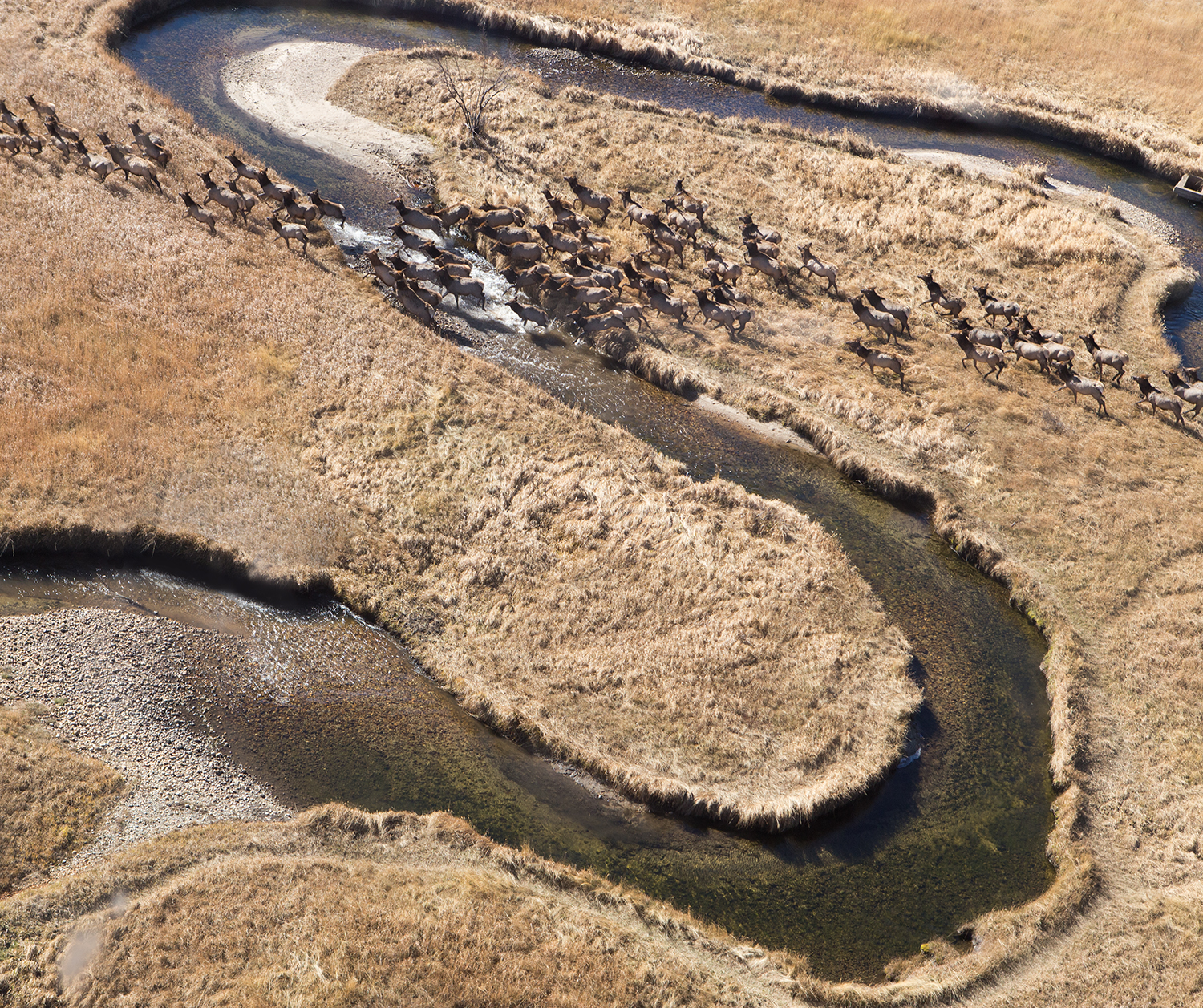
The ground count data were collected by volunteers organized by the National Park Service in approximate monthly surveys, with three surveys occurring during the first week of each winter month (November - March). The data from 2001 consisted of surveys that occured during a single week of winter, with two to three survey days during the single week. The maximum from each survey year was taken as the average elk count for the given year. This data reduction process was used in order to clarify the joining of data in ArcGIS which does not handle time series data well. The data were recorded by volunteers who drove specific transect routes in the town of Estes Park and in the winter range of Rocky Mountain National Park. There were 10 transect routes driven in total in the early morning hours. Elk sub-herds were spotted from cars and volunteers will stop, get out of their cars if safe, and use strong effort to count the elk within the group. They mark the location of the sighting on a map, record VHF collars that have been deployed for a Chronic Wasting Disease study, and attempt to classify the elk into four age/sex categories. The probability of detection was not accounted for in this analysis, but will be considered for future work.
Data from the National Landcover Database was downloaded from the US Geological Survey National Map viewer. The percent of developed land was calculated using ArcGIS tools in ESRI's ArcMap program.