
Introduction
Location Map
Base Map
Database Schema
Conventions
GIS Analyses
Flowchart
GIS Concepts
Results
Conclusion
References
Introduction
Testing the Accuracy of PRISM Data by Comparison with Real Weather Stations in Yuma Proving Ground, Arizona
Sean Jacobson and Alyssa Borrelli
PRISM
The PRISM (Parameter-elevation Regressions on Independent Slopes Model) climate group at Oregon State University (OSU) is widely used for spatial climate data when accurate weather data are not generally available.

(PRISM Climate Group 2010)
Prism is a “unique analytical tool [which] incorporates point data, a digital elevation model, and expert knowledge of complex climactic extremes, including rain shadows, coastal effects, and temperature inversions” (prism.oregonstate.edu).
Yuma Proving Ground
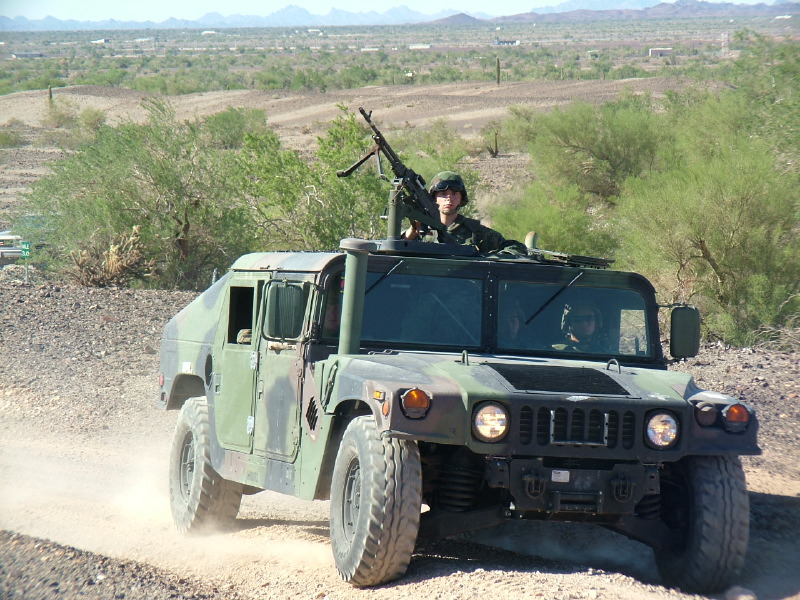
(Yuma Proving Ground 2010)
Yuma Proving Ground (YPG) is a test facility for the army, where they test a myriad of munitions and weapon systems. We chose to do a GIS project on YPG because a research team at Colorado State University is currently being funded to learn more about intermittent and ephemeral streams in Yuma Proving Ground, Arizona. The mission of the YPG research team at CSU is to investigate hydrologic and geomorphic processes involved in the streams, and their interaction with riparian biota. The team is made up of four professors in the Natural Resources Department: Dr's David Cooper, Ellen Wohl, Stephanie Kampf, and Dennis Harry, and their graduate students, Jeremy Shaw, Nick Sutfin, Sean Jacobson, and Andrew Genco, respectively.
GIS Project
The purpose of this project is to analyze weather data from stations inside YPG received from Gabriel Langbauer, a member of the YPG meteorology team in conjunction with weather data from the Western Regional Climate Center’s (WRCC) website, wrcc.dri.edu, and compare it to weather data from the weather data estimations from the PRISM climate group. The PRISM website has data available in raster format, and to compare that spatial data to our weather station data, we used a method called krigging to come up with data in raster format so that it may be compared with PRISM data.
Specifically, we are comparing the values of the average precipitation from YPG weather stations from 1997 – 2009, and WRCC weather stations from 1971-2000 to PRISM estimates of average precipitation from 1971 – 2000. We also compared the average monthly temperature based on daily data for 2009 from YPG and WRCC to PRISM temperature for 2009. The underlying assumption is that, although fluctuations in precipitation do occur, the average precipitation over a thirty year period of time should be approximately the same over a 12 year period of time. This assumption had to be made because of the general lack of YPG data.
Contact
Sean Jacobson: PhD candidate at Colorado State University, [email protected]
Alyssa Borrelli: Masters candidate at Colorado State University, [email protected]