Introduction
Location Map
Base Map
Database Schema
Conventions
GIS Analyses
Flowchart
GIS Concepts
Results
Conclusion
References
GIS in Wetland Restoration
Conventions and Assumptions
Field Data: Our onsite data on veg composition, sediment thickness, and depth to water was collected by C. Potter in the summers of 2009 and 2010. Physical depth measurements have a precision of .1 cm. Our vertical measurements are presented to an accuracy of +/- 1 cm.
Digital Data: We aquired 1/3 arc second DEM data with a grid size of 10 m. This data was only applied to the overall slope of the wetlands as the resolution of the field data was far greater than these DEMs.
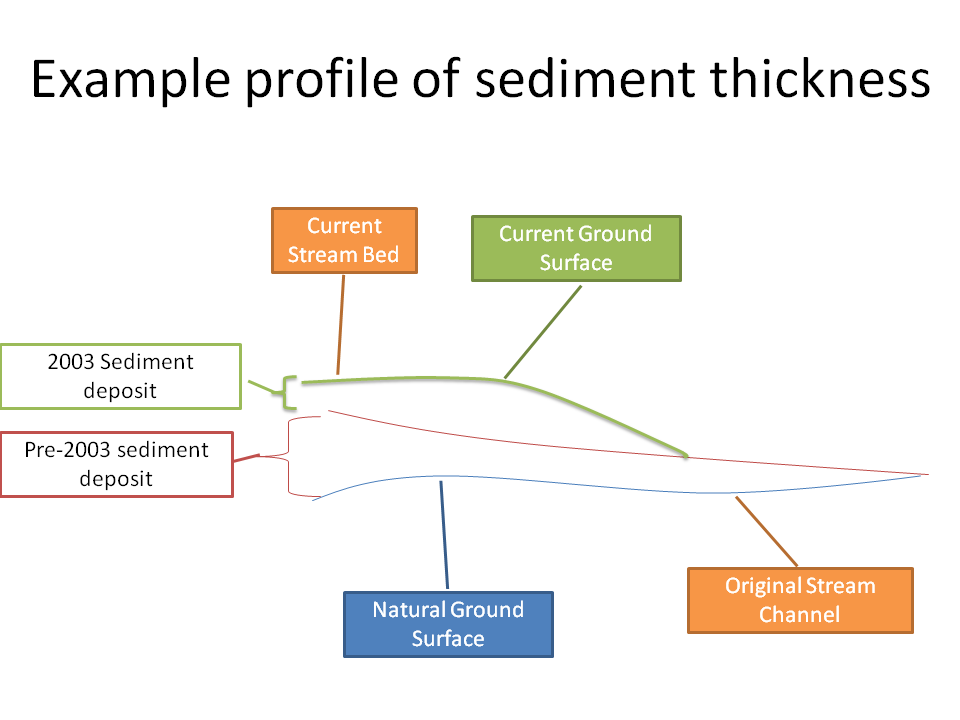
Zero Elevation: For this analysis we chose our reference (0) elevation to be at the original surface of Lulu City wetland for two reasons. 1. This surface still exists in its original condition on the western side of the wetland. 2. From this reference elevation, sediment deposits in the wetland are positive numbers, representing height above original surface. For our final analysis we gave each wetland type a positive number based on how high above the original surface the wetland could be to maintain appropriate access to the water table.
Vegetation Composition: Community composition was derived from vegetation surveys done by C. Potter in 2009 and 2010. For each present species, a percent cover was also estimated to describe relative dominance. Community names were based on the dominant species (1 to 3) by percent area cover, which was generally above 50 percent for named species.
Depth to Water: This value is represented as a positive number (cm) for increasing depths below the surface. A negative DTW value would indicate the presence and depth of surface water.